
Why the Daintree Rainforest’s Age Makes Its Biodiversity So Extraordinary
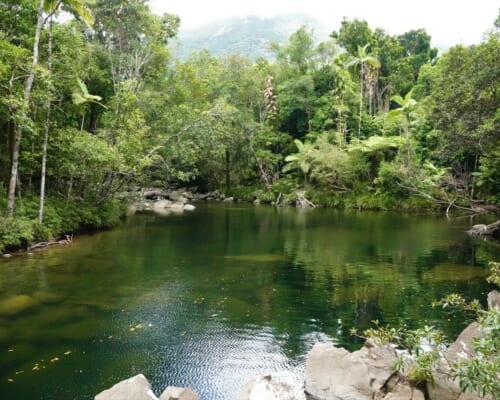
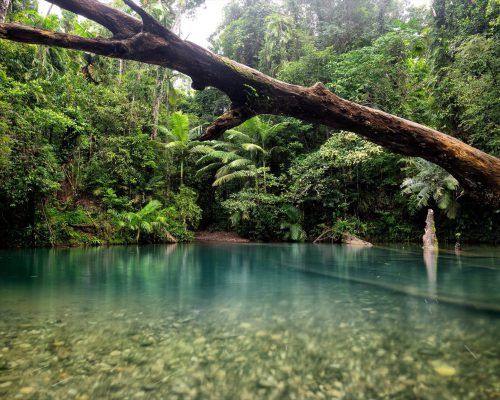
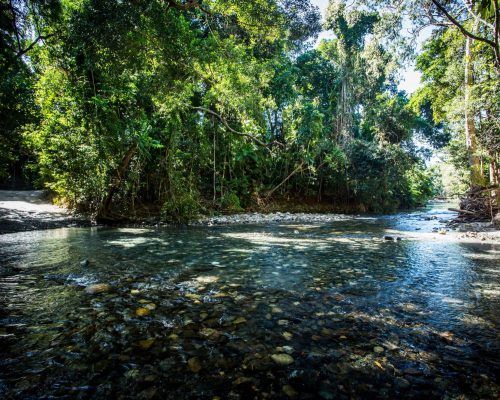
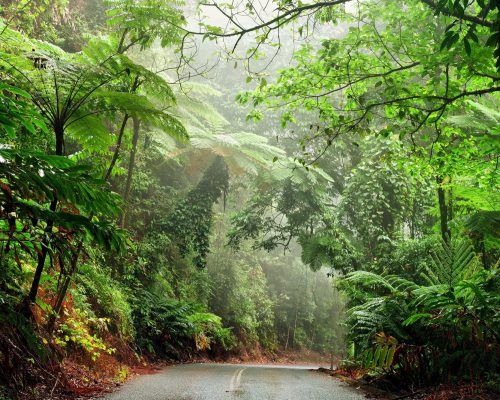
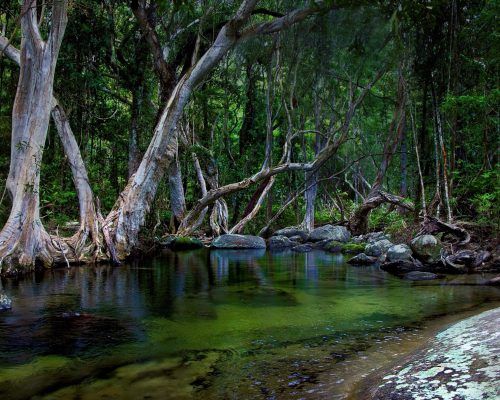
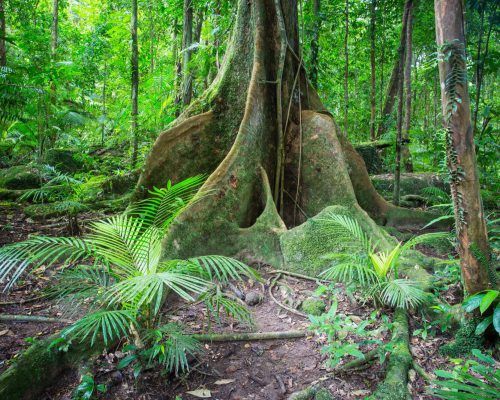
The Daintree Rainforest in Tropical North Queensland is more than 135 million years old, making it the oldest continuously surviving tropical rainforest on Earth and one of Australia’s most remarkable records of evolutionary history. Its extraordinary biodiversity is not simply about how many species live there; it is about how long plants, animals, and ecological relationships have had to survive, adapt, and evolve together.
For Australian travelers, that changes what a visit means. You are not simply walking through beautiful rainforest. You are entering an ecosystem whose history reaches back to the age of the dinosaurs and preserves living evidence of some of the earliest chapters in the evolution of flowering plants.
The Daintree in a nutshell
The Daintree’s age has allowed exceptionally old biological lineages to persist while enormous environmental changes transformed the rest of Australia.
- The rainforest landscape has been evolving for at least 135 million years.
- Many Wet Tropics rainforest species originated when Australia was still part of Gondwana.
- The region contains an extraordinary concentration of primitive flowering-plant families.
- Rare species survive in small refugia where suitable rainforest conditions persist through major climatic changes.
- Seeing the Daintree with an experienced guide can turn apparently ordinary trees, vines, fruits, and forest layers into evidence of that evolutionary history.
Age changes the meaning of biodiversity
A younger ecosystem can be exceptionally species-rich. What makes the Daintree different is the combination of diversity and evolutionary continuity.
The wider Wet Tropics contains an almost complete record of the major stages in the evolution of plant life on Earth. Many rainforest species originated while Australia remained part of Gondwana, and the region contains 13 of the 19 flowering-plant families recognized as primitive, with two confined to the Wet Tropics.
| What you encounter | Why its age matters |
| Primitive flowering plants | They preserve characteristics linked to the early evolution of flowering plants. |
| Isolated rainforest species | Long periods of geographic and ecological isolation can produce highly localized species. |
| Ancient forest communities | Plants, animals, fungi, waterways, and soils have developed relationships across immense spans of time. |
| Rainforest refugia | Stable pockets allowed vulnerable lineages to persist as Australia’s climate changed around them. |
The Idiot Fruit: a survivor from deep time
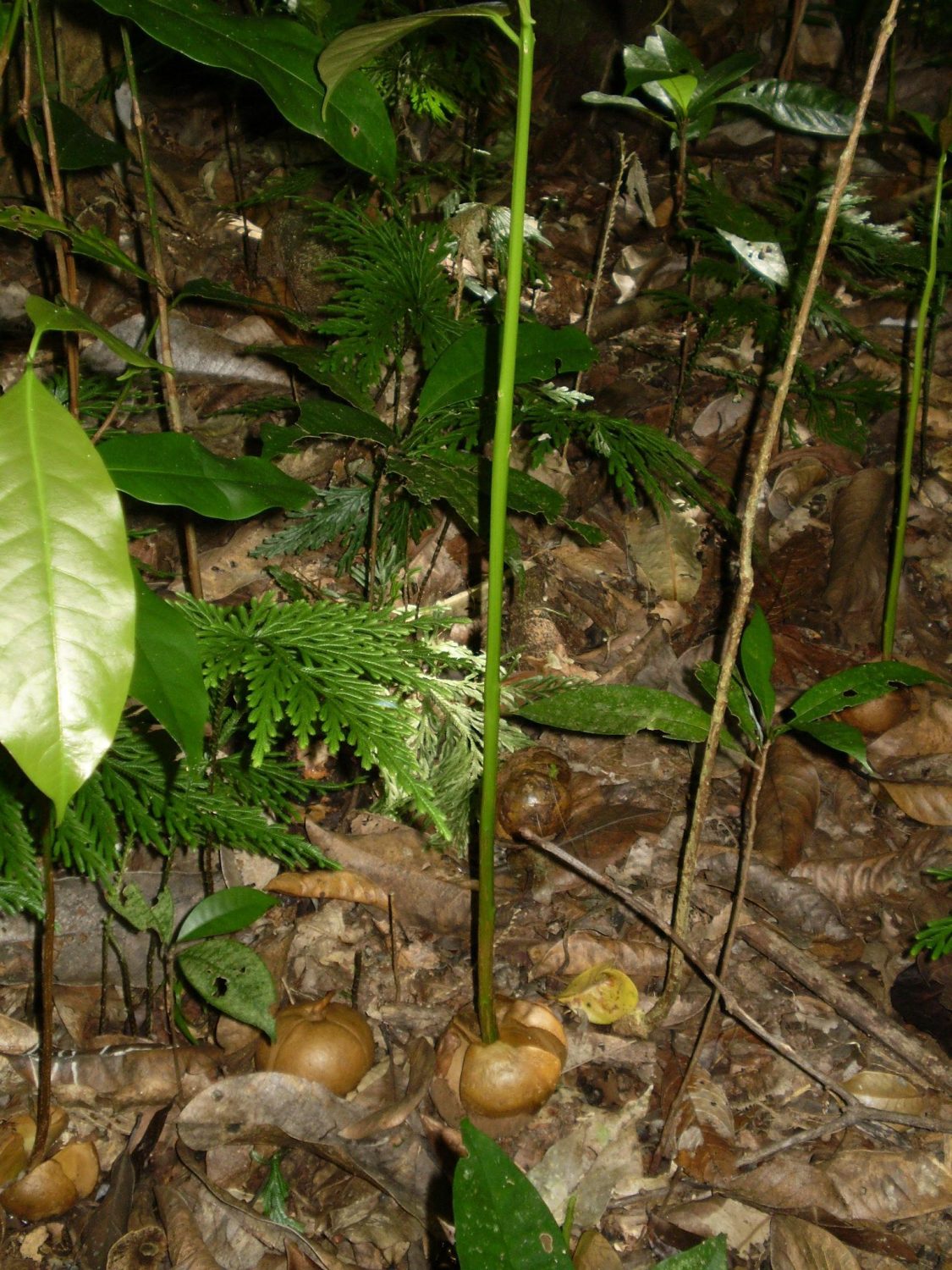
Few plants explain the Daintree story better than the Idiot Fruit, Idiospermum australiense, sometimes called the Green Dinosaur.
This unusual tree occurs only in a handful of Wet Tropics locations. Queensland Parks describes it as a “true relict” and the only member of its family. Its unusual seeds can produce up to five cotyledons, rather than the one or two typical of most flowering plants.
The important point is not that an individual tree is 120 million years old. It is that its evolutionary lineage reaches deep into the period when flowering plants were developing and diversifying.
Noah Valley and the value of refugia
Places such as Noah Valley demonstrate why protecting intact rainforest matters. A refugium is an area where environmental conditions remain suitable while surrounding landscapes change, allowing species and genetic lineages to persist.
The Noah and Oliver Creek valleys are recognized habitat for Idiospermum australiense, and historic conservation records identify Noah Creek among the species’ few known locations.
Protected private World Heritage land can therefore add something important to the broader conservation landscape: relatively undisturbed habitat where rare and localized species can continue functioning inside the ecological communities on which they depend.
How to experience an ancient rainforest properly
A good Daintree visit becomes much richer when you know what you are looking at.
☐ Choose experiences that explain evolutionary history, rather than treating the rainforest simply as scenery.
☐ Ask about ancient plant families and locally restricted species.
☐ Look at the forest in layers, from the ground and understory to vines and canopy.
☐ Spend time in quieter, less-disturbed rainforest where subtle details become easier to notice.
☐ Use a knowledgeable guide who can connect individual species to the Daintree’s much larger story.
The result is a different kind of trip: instead of merely photographing an old forest, you begin understanding why it survived.
A small way to bring the Daintree home
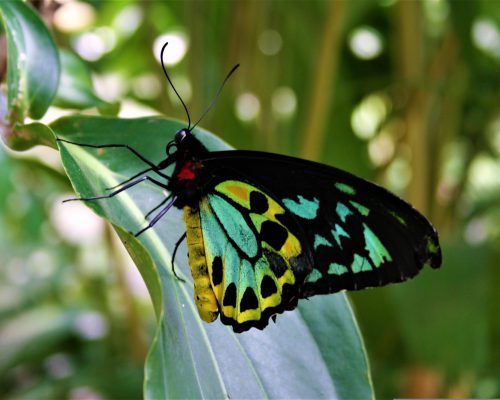
After a trip through the Daintree, some of the best souvenirs are already on your phone: filtered light beneath an ancient canopy, Cape Tribulation’s meeting of forest and coast, or a tiny wildlife encounter you happened to catch. Choosing a few favorites for your home gives those memories somewhere to remain part of everyday life. For an accessible alternative to custom framing every photograph, Australian travelers can browse ready made frames in every size and select finishes that suit the images they want to keep visible.
For travelers who want more than a quick look
Tony’s Tropical Tours is a multi-award-winning, family-owned Port Douglas small-group tour company offering day tours to the Daintree Rainforest, Mossman Gorge, Cape Tribulation, and the Tablelands. For Australian and international travelers seeking greater depth and privacy, the company also offers access to private World Heritage rainforest in Noah Valley, giving guests an opportunity to explore a rarely visited rainforest refugium associated with exceptional plant diversity. Booking directly with Tony’s Tropical Tours is an option for travelers who want to experience the Daintree at a slower, more interpretive pace and understand why this ancient landscape deserves more than a passing look.
Go deeper before you travel
For authoritative background on why the wider region is globally important, the Australian Government’s Department of Climate Change, Energy, the Environment and Water provides an excellent overview of the Wet Tropics of Queensland World Heritage Area. It explains the area’s evolutionary history, exceptional plant diversity, primitive flowering plants, and World Heritage significance.
Frequently asked questions
Why is the Daintree considered the world’s oldest continuously surviving rainforest?
The Daintree’s rainforest landscape has persisted and evolved for at least 135 million years, maintaining rainforest communities through enormous geological and climatic changes.
Did today’s Daintree trees actually live alongside dinosaurs?
No. Individual trees are not 135 million years old. The remarkable continuity lies in the rainforest ecosystem and ancient evolutionary lineages represented by species living there today.
Why does having a guide matter?
Much of the Daintree’s significance is easy to walk past. A knowledgeable guide can identify species, explain evolutionary relationships, point out subtle ecological interactions, and place what you are seeing within a story measured in millions of years.
An ancient story still unfolding
The Daintree’s biodiversity is extraordinary because time has given evolution an exceptionally long canvas. Its ancient plant lineages, isolated species, and rainforest refugia turn a visit into an encounter with living evolutionary history. Understanding that story changes the forest from spectacular scenery into something far rarer: a surviving window into Earth’s deep past.